
Best Knee Pads for Pole Dancing: D3O, Foam, and Gel Compared
Your knees cop a beating in pole. If you're searching for the best knee pads for pole dancing and not sure where to start, the padding type is the decision that matters most. Between drops, kips, floorwork transitions and those spins where your full body weight lands on one knee, it adds up. And if you’ve been training in cheap foam pads that went flat three months in, you already know the sting of hitting hard studio floorboards with basically zero protection underneath you.
So when it comes to picking knee pads that actually protect you, the padding inside matters just as much as the pad itself. We’re breaking down the three most common types — EVA foam, gel, and D3O knee pads — so you can figure out which one is worth your money and, more importantly, which one will keep you training safely and for longer.
EVA foam is passive cushioning that compresses and needs replacing every 6–12 months. Gel distributes pressure but doesn't absorb high-velocity impact. D3O® is a rate-sensitive smart material — soft at rest, stiffens on impact — the only padding engineered for drops, kips, and flips. If you're doing high-impact tricks, D3O® knee pad is the only option worth considering.

Why Knee Protection Matters for Pole Dancing
Pole has evolved over the years and the popularity of pole flips, kips and drops has left many pole dancers in pain. You’re dropping from height, landing on your knees during kips and flips, sliding on hard studio surfaces, and repeating the same tricks over and over in a single class. Hardwood, concrete, sprung floors, none of them are forgiving.
Without proper knee protection, that repetitive impact builds up. We’re talking bruising, swelling, and over time, the kind of chronic knee pain that pulls you out of training altogether. The right knee pad doesn’t just cushion the blow, it absorbs the force before it reaches your joint. That’s a big difference.
Types of Knee Pad Padding: A Quick Comparison
Not all padding is created equal. Here’s how the three main types stack up for pole dancers.
EVA Foam Knee Pads
The most common padding in dance knee pads. It’s lightweight and cheap to produce, which is why most brands use it. The problem? EVA foam compresses under repeated impact. After a few months of regular training, it loses its cushion and starts to flatten out. You’re essentially kneeling on a thin sheet of compressed material that’s doing very little for you. Most foam pads need replacing every 6–12 months if you’re training consistently.
Gel Knee Pads
A step up from foam in terms of comfort. Gel moulds to the shape of your knee and distributes pressure more evenly, which feels better on initial contact. But gel doesn’t actively respond to force. It deforms under pressure rather than absorbing and dispersing the energy. For light floorwork and choreography, gel is a reasonable option. For high-impact moves like drops, kips, flips, it doesn’t offer the level of protection your knees need.
D3O Knee Pads
A rate-sensitive smart material originally developed for military and motorcycle protection. In its normal state, D3O® is soft and flexible and it moves with your body. But on impact, the molecules lock together instantly, stiffening to absorb and disperse the force across a wider area before it reaches your knee. The harder the hit, the harder D3O® works. It’s the only padding type that actively responds to the level of force applied, and it doesn’t compress or degrade the way foam does over time.
|
EVA Foam |
Gel |
D3O |
|
|
Impact absorption |
Low–moderate |
Moderate |
High |
|
Durability |
Compresses within 6–12 months |
Better than foam, still degrades |
Maintains performance long-term |
|
Response to force |
Passive cushioning |
Passive cushioning |
Active — stiffens on impact |
|
Best suited for |
Light floorwork, beginners |
Choreography, moderate contact |
Drops, kips, flips, heavy floorwork |
|
Used in |
Most dance knee pads |
Some premium pads |
Military, motorcycle, Tatiana Active Ultimate Knee Pads |

What Is D3O Padding and Why Does It Change Everything?
D3O is a non-Newtonian material, which sounds like something from a science textbook, but the concept is straightforward. It’s a material that changes behaviour depending on how fast force is applied to it.
With simple pole choreography, D3O® stays soft and flexible. You barely notice it’s there. But when your knee hits the floor during a drop or a kip, the material locks together in milliseconds, spreading the impact force across the pad instead of letting it concentrate on your kneecap.
This is the same technology used in motorcycle armour and military-grade protective gear. It’s been trusted by soldiers and extreme sports athletes since 1996, and it’s the technology inside every pair of Tatiana Active Ultimate Knee Pads.
The difference between D3O® and standard foam isn’t marginal. It’s a completely different approach to impact protection that responds to force rather than just sitting between your knee and the floor.

Best Knee Pads for Floorwork and High-Impact Tricks
If your training involves regular drops, kips, flips, or any trick where your body weight comes down hard on your knees, the padding type matters more than anything else.
EVA foam was never designed for that level of impact. It was designed for light cushioning, such as gardening pads and basic work wear. Gel handles moderate contact reasonably well, but it doesn’t absorb high-velocity impact the way your knees need it to during a pole drop onto hardwood.
D3O® is the only material in the dance knee pad space that actively responds to high-impact force. It’s why we spent 2.5 years developing the Ultimate Knee Pads, because nothing else on the market was built for what pole dancers actually put their knees through.
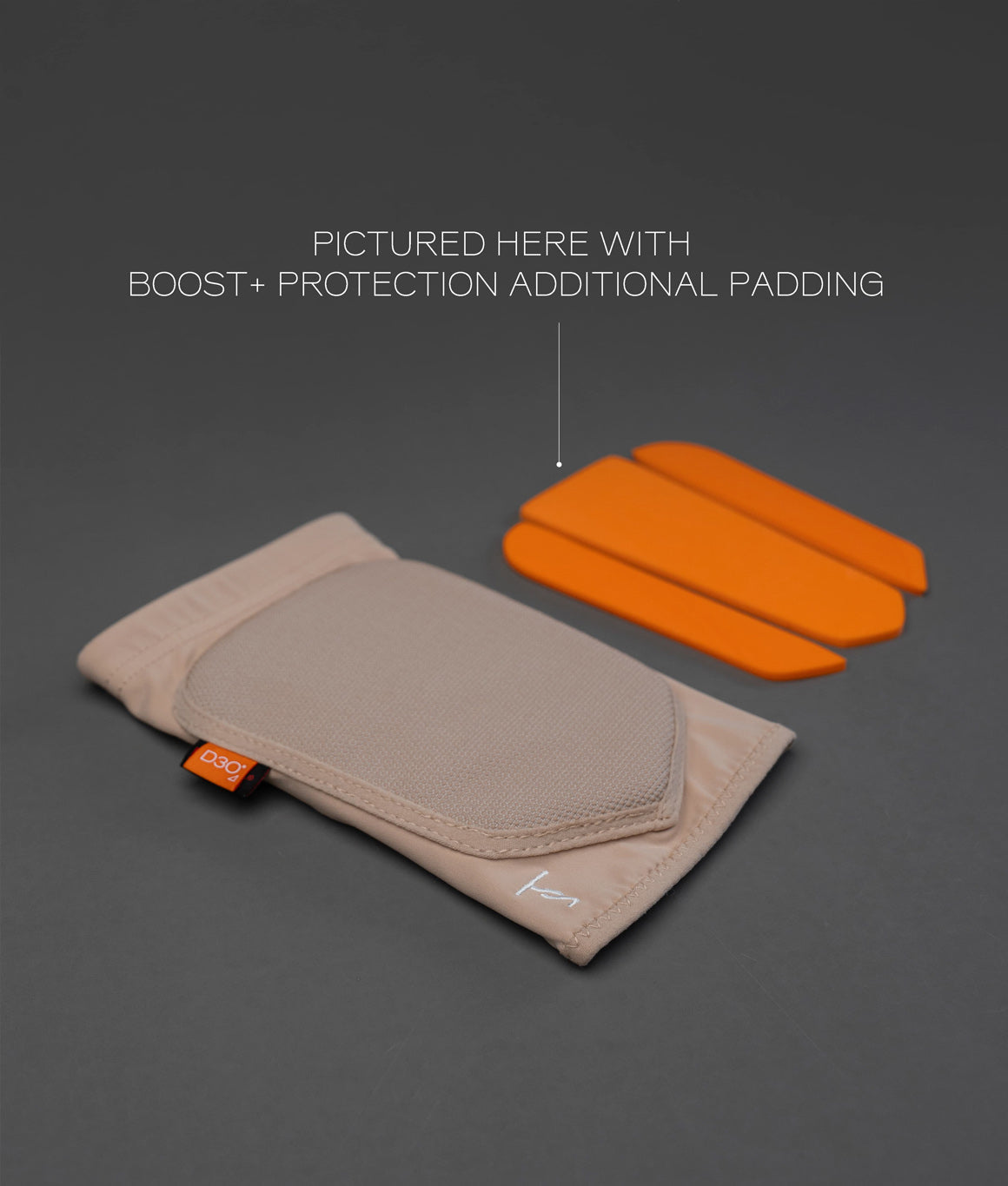
For dancers who want additional coverage for extra-sensitive knees or particularly heavy impact work, our Boost + Protection insert adds another layer of padding that sits inside the knee pad for maximum impact absorption.
Is it worth paying more for better knee pads?
Yes, and the math is simple. Foam pads cost $30–50 AUD but need replacing every 6 months. Over two years, that's up to $200 spent on pads that quietly stop working before you even notice.
D3O® knee pads cost $130–138 AUD upfront and last around 4 times longer. For anyone training more than twice a week, the cost-per-use gap closes fast, and that's before you factor in what a single physio visit costs.
If you train lightly once a week, foam may serve you fine. If you're regularly doing drops, kips, and flips, the choice between padding types becomes a health decision, not just a preference.

What About Washability and Care?
This one catches a lot of people off guard. You’re training hard, sweating through your knee pads multiple times a week, so they need washing. But how you wash them can make or break the padding inside.
EVA foam breaks down faster when machine washed or exposed to heat. The compression that already happens from use gets accelerated by the wash cycle.
Gel holds up better to washing but can lose its shape and consistency over time with regular exposure to heat or harsh detergents.
D3O® cannot be washed in order to maintain its structure and protective properties however, as long as you follow the care guidelines (airing out after each class to avoid sweat/moisture buildup or light dusting of baking powder to remove odours). For detailed care instructions, check out our Knee Pads FAQ page.
The takeaway: whichever knee pad you choose, check the care instructions before you buy. A pad that degrades in the wash is a pad you’ll be replacing sooner than you’d like.
Shop the World’s First Technical Dance Knee Pads
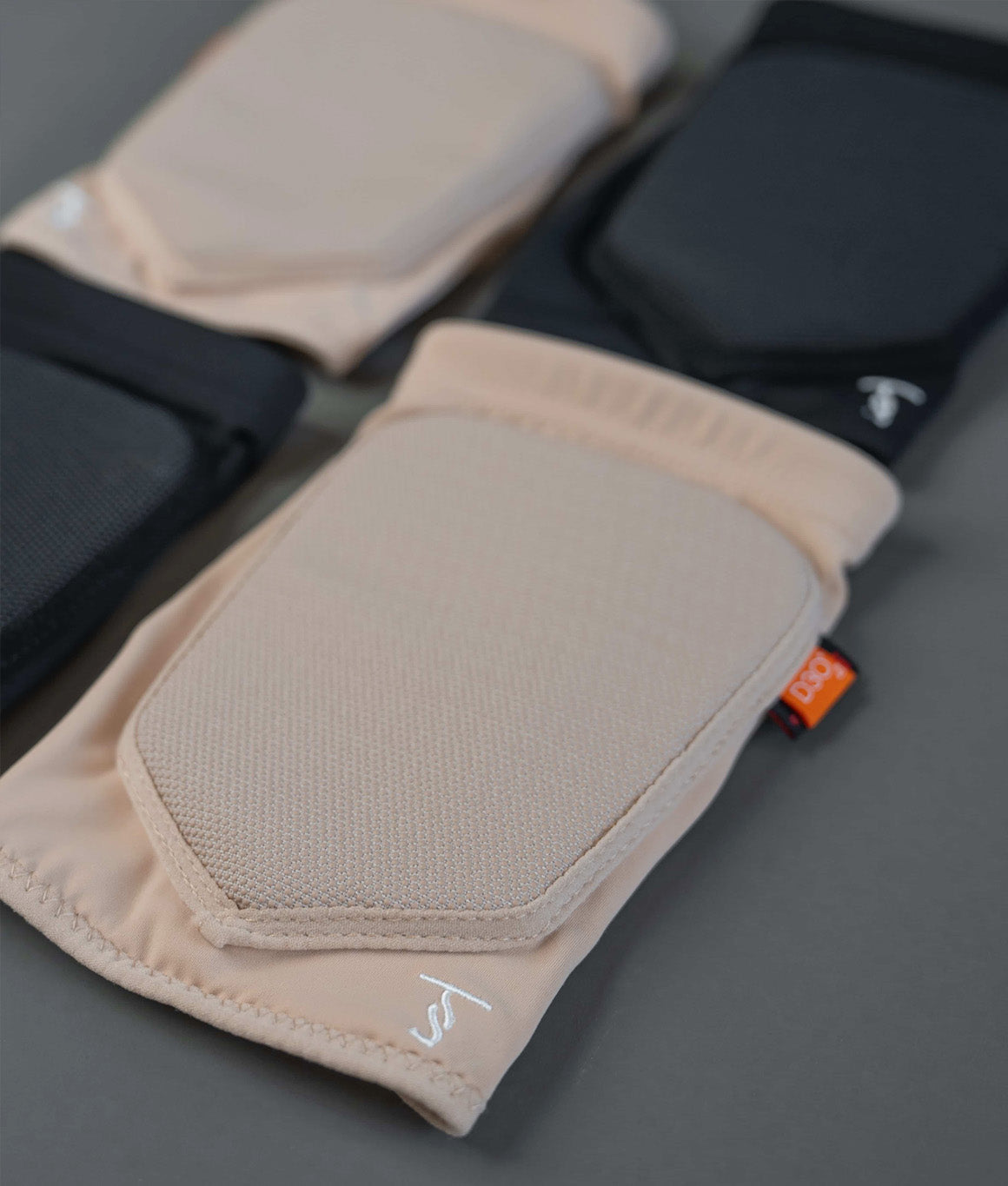
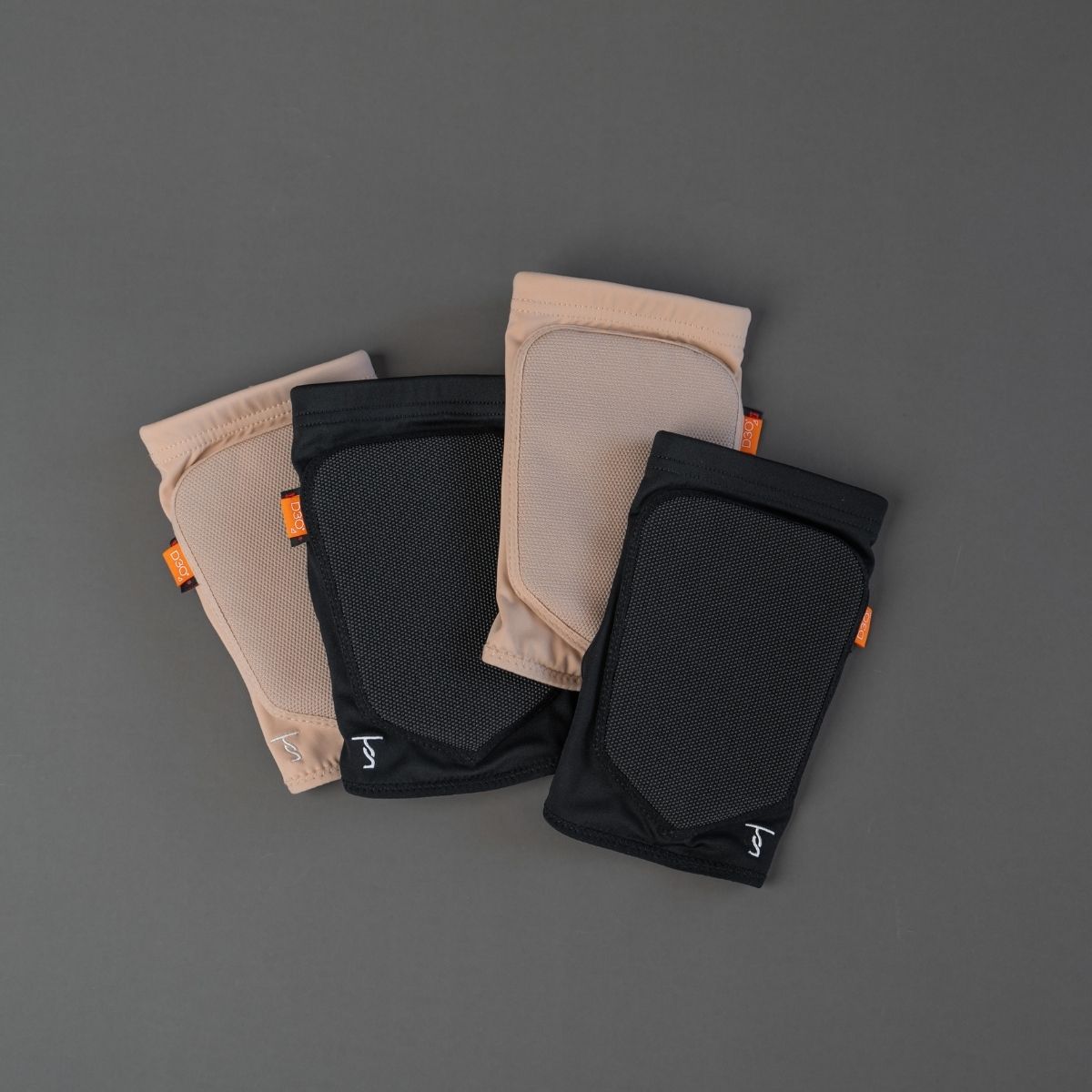
If you’re serious about protecting your knees, and training harder because of it, the Ultimate Knee Pads by Tatiana Active are the only technically engineered pole dance knee pads on the market. D3O® impact technology. SuperFabric® outer that outlasts all pole studio floors. Open back design for aerial grip behind the knee. Available in Black and Latte.
It’s about time you realise that pole dancing doesn’t have to be painful. Shop yours now.
Want to learn more about why knee protection matters? Read our full guide: Why Every Pole Dancer Needs Protective Dance Knee Pads
Written by founder of Tatiana Active and pole dancer since 2013. After 10 years of training kips, drops and flips, and going through every knee pad on the market, Tatiana spent 2.5 years developing the first technically engineered pole dance knee pad. This guide draws on that research.